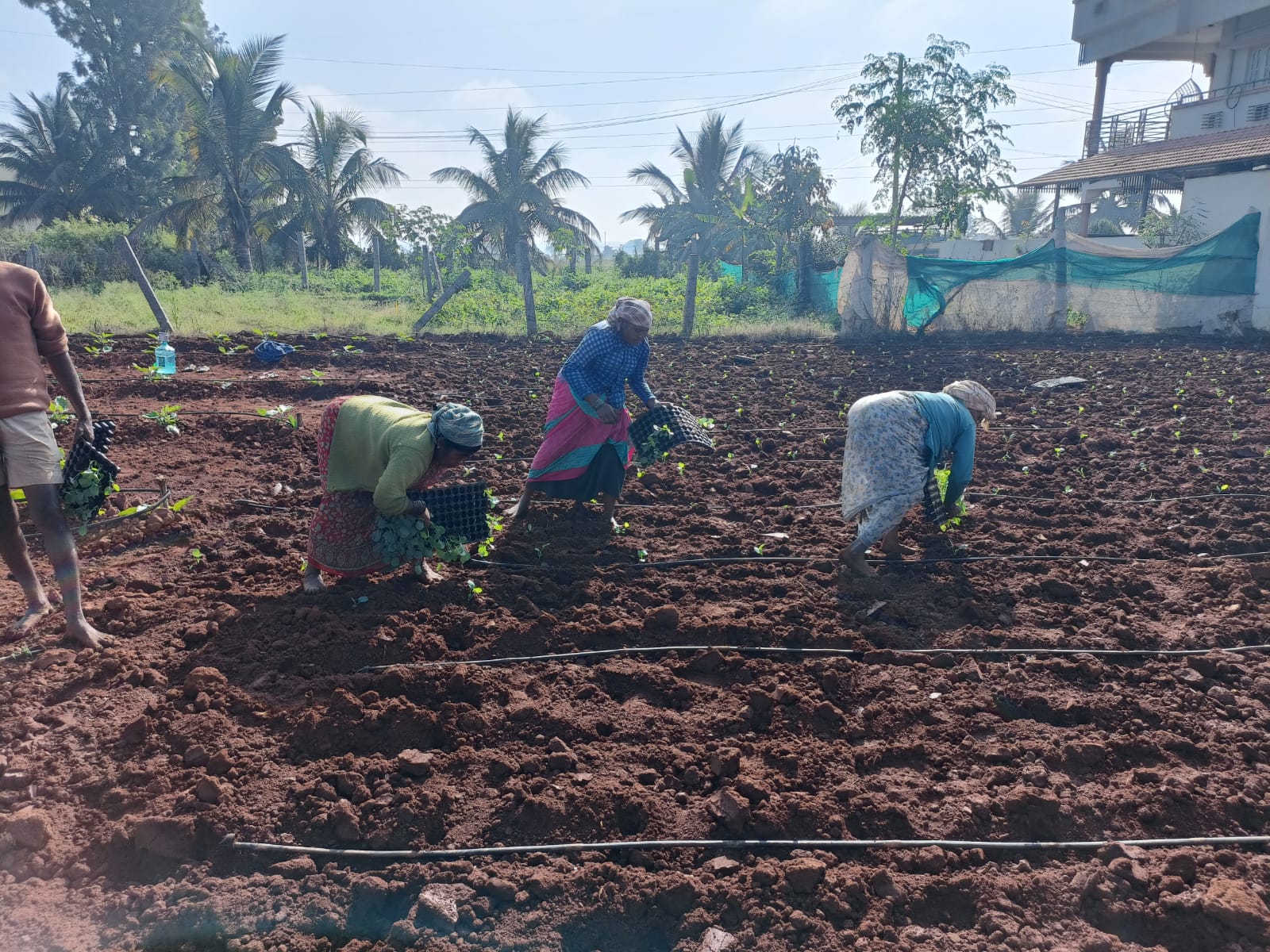
Sustainable agriculture is a cornerstone of Integrated Water Resource Management (IWRM), ensuring that farming practices not only meet present-day food and income needs but also preserve soil, water, and biodiversity for future generations. In many rural regions, agriculture is the lifeline of local economies, yet it is highly vulnerable to erratic rainfall, depleting groundwater, and poor land-use practices. By integrating water efficiency, soil health management, and ecological farming techniques, sustainable agriculture enhances productivity while reducing environmental impact. It promotes resilience in food systems, supports climate adaptation, and empowers farming communities to shift toward long-term, nature-aligned solutions.
At Safe Water Network India (SWNI), we integrate sustainable agriculture practices into our broader IWRM programs to ensure water use efficiency and land restoration in vulnerable farming regions. In Solapur, Maharashtra, our watershed interventions—such as check dams, bunding, and soil moisture conservation—have transformed previously water-scarce farms into productive plots, enabling farmers to cultivate more than one crop per season. We promote low-water-use crops, composting, organic inputs, and water budgeting at the community level. In collaboration with local self-help groups, SWNI also drives agri-entrepreneurship by training farmers in climate-smart techniques and linking them to markets. These efforts not only conserve water but also improve yields, livelihoods, and long-term food security for the communities we serve.